
Why We Look at the House Before Choosing a Replacement AC
Replacing an air conditioner should start with the home, not the old model number. See why equipment sizing has to account for the house itself.
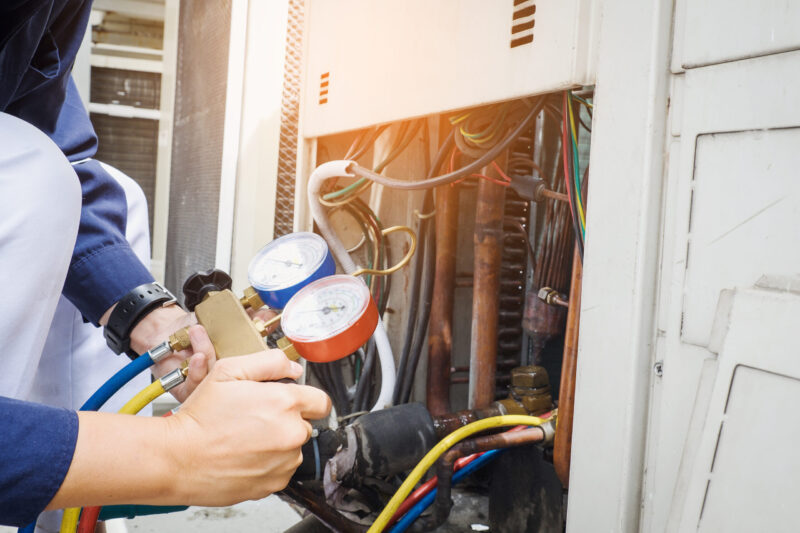
Start with the house, not the old model number
Replacing an air conditioner with the same size that was already there sounds logical. The old system is three tons, so put in another three-ton unit. The cabinet fits the same space, the house has not moved, and nobody has to spend much time thinking about it.
The problem is that the old system may not have been sized correctly in the first place, and the house itself may have changed since that equipment was installed.
Eskimo Bros specifically references proper heat-load calculations as part of our replacement process. We also note that insulation, ductwork, windows, wall changes, and other changes to a home can affect how a heating and cooling system performs.
That is why the replacement conversation should begin with the house instead of the model number on the old condenser. Learn more about us and how we approach existing homes.
Square footage alone does not describe the building
Two 2,000-square-foot Florida homes can behave very differently. One may have newer windows, good attic insulation, lower ceilings, and a fairly compact floor plan. Another may have large areas of glass, vaulted ceilings, an addition, an older duct system, and rooms that receive strong afternoon sun.
The floor area is similar. The amount of cooling those houses require may not be. That is the basic reason load calculations exist. They give the HVAC contractor a way to look at the building itself rather than relying only on a rule of thumb.
The homeowner does not need to perform the calculation. What helps is providing accurate information. Tell the estimator if a room was added. Mention replacement windows. Explain if part of the house is rarely used or if a formerly open porch is now enclosed. If you know insulation was changed, say so.
Small pieces of history can explain why the house behaves the way it does.
Existing comfort problems should be discussed before the new equipment is selected
Replacement day is not a good time to quietly accept every problem the old system had. If the primary bedroom has always stayed warmer than the rest of the house, tell us during the estimate. If airflow is weak from one group of vents, mention it. If the system cools the house but certain rooms remain noticeably different, that should be part of the discussion before new equipment is chosen.
We provide air duct repair along with AC work, which matters because the outdoor unit is only one part of the heating and cooling system. A new condenser still depends on the duct system to move conditioned air through the house.
If the problem lives in the ductwork, simply installing larger equipment does not make that duct issue disappear. Current cooling problems can also be evaluated through A/C repair before you commit to a full replacement path.
Bigger equipment is not automatically an upgrade
Homeowners naturally associate larger capacity with stronger performance. In HVAC, the goal is not to buy the largest machine that fits beside the house. It is to install equipment appropriate for the actual load.
Oversizing can change how the system operates because the equipment may satisfy the thermostat differently from a system selected around the home's needs. In Florida, where cooling and indoor moisture are closely connected, run behavior matters.
We offer dehumidifier services and other indoor air quality work alongside central cooling, which is another reason we treat the house and HVAC system as connected pieces. Thermostat setup also belongs in that conversation through thermostat repair and installation.
The point is not that a homeowner needs additional equipment. It is that replacement sizing should not be reduced to "bigger is better."
Changes to the house can change the HVAC conversation
A replacement estimate should include anything meaningful that happened since the current system was installed. A large tree may have been removed and changed the afternoon shade on one side of the house. Windows may have been replaced. An addition may have changed the conditioned square footage. Interior walls may have moved during a renovation.
We ourselves list changes such as windows, insulation, ductwork, walls, and shade conditions among factors that can affect system performance.
That is unusually specific information for an HVAC company to publish, and it points to a useful homeowner habit: do not assume the contractor can see the entire history of the property during a twenty-minute walkthrough. Tell them. The estimate is better when the person selecting equipment understands what changed.
Sometimes the better solution is not one central system doing everything
A home addition or converted garage may have been added long after the original central system. Trying to force that space onto the same equipment is not always the only option.
We also install and service ductless mini-splits. That gives the estimator another possible way to address a room or separate space without automatically changing the system serving the entire home.
Again, that does not make ductless the default answer. It simply means replacement planning can account for how different areas of the house are used. A home with one unusual room does not necessarily need the rest of the system redesigned around that room.
A replacement estimate should explain the reasoning
The final proposal should make more sense than "this is the model that replaces your old one." Ask why the recommended capacity fits the house. Ask whether the existing ductwork is expected to work with it. Ask whether any long-standing comfort issue affected the recommendation.
The homeowner does not need to become an HVAC designer. The contractor should be able to explain the basic logic in normal language.
After installation, ongoing care through maintenance plans helps keep the new system on a steady schedule. Browse financing options when replacement timing and budget need to line up.
We serve Hillsborough, Pinellas, Manatee, Sarasota, and Charlotte counties and work on central AC systems, heat pumps, mini-splits, thermostats, ductwork, and indoor air quality equipment. You can reach us at (813) 400-0123 or through contact us for repair or replacement service.